Our story
A small roastery with a single obsession: coffee that tastes like where it came from.
We began small — a single drum roaster in a rented unit, a folding table, two people and a shared conviction that coffee grown with care should be roasted with equal care and reach your cup while it still has something to say.
How it started
The roastery grew from a frustration shared by two friends who spent years buying specialty coffee and wondering why it tasted flat by the time it arrived. The answer was almost always the same: too much time between roast and cup, too much coffee sitting in a warehouse waiting.
The solution was obvious once stated plainly: roast to order. Only roast what is already sold. Ship the same week. It required rebuilding the supply chain from the sourcing end and keeping tight lot sizes — but the cup quality justified every complication.
Today we work directly with a small network of importers who share our approach to traceability. Every lot we carry has a farm or cooperative name attached to it, an altitude, a varietal, a process date. We taste every lot before committing to it and we publish our roast dates on every bag.
The roastery today
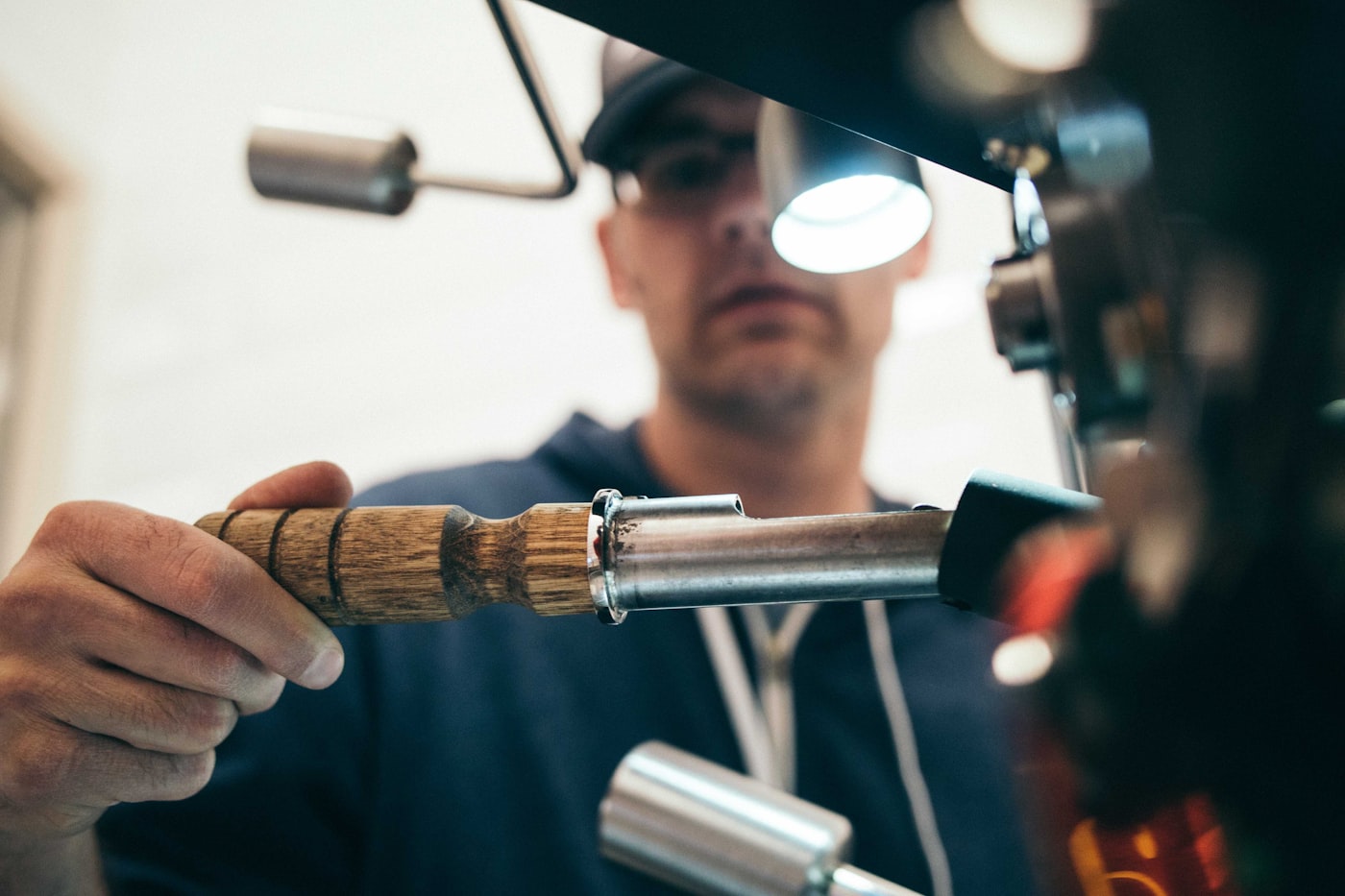
We operate a 12 kg drum roaster with a linked logging system that records every degree of every roast. We roast on Tuesday and Thursday mornings. Orders placed by Monday ship on Tuesday; orders placed by Wednesday ship on Thursday. That rhythm is non-negotiable — it is the only way to guarantee freshness.
We keep our range deliberately tight: eight single-origin lots, one house espresso blend, one decaf, and a small selection of brewing equipment that we use ourselves and recommend without reservation.
Values
01
Freshness as a non-negotiable
Coffee degasses for about 72 hours after roasting and then begins its decline. We ship within 48 hours of roasting — not because it is easy, but because it is the only way to deliver coffee in its prime.
02
Traceability at the lot level
We know the farm or cooperative, the varietal, the harvest year, the process date and the altitude of every lot we carry. If a detail is missing, we don't buy the coffee.
03
Honesty about what's in the bag
Roast dates on every bag. Tasting notes derived from actual cuppings, not marketing. If a lot changes character mid-harvest, we update the notes. No surprises, no spin.
The roasting process
Sourcing
We taste dozens of samples each season through our importer network. Lots that pass our cup quality threshold and meet our traceability requirements are purchased in small quantities — 50 to 150 kg at a time.
Profile development
Each new lot gets multiple roast profiles on the sample roaster before the first production batch. We log every roast using Cropster, targeting a development time of 20–24% and first crack at the appropriate development window for the processing method.
Production roasting
Production roasts happen twice weekly on a 12 kg drum roaster. We roast only what is needed for that week's orders, which means batch sizes are small and the drum is never idle for long. Consistency is audited against the reference profile.
Packing & shipping
Beans rest for 24–48 hours after roasting before packing, which lets the most volatile CO₂ escape. Bags are heat-sealed with a one-way valve and stamped with the roast date by hand. Orders ship the same day they are packed.
The team
HEAD ROASTER
Team member — pending
Responsible for profile development, quality control and all production roasting. Former competition judge and specialty coffee educator.
SOURCING & OPERATIONS
Team member — pending
Manages importer relationships, lot selection, logistics and fulfilment. Spent four years working with a Swiss green-coffee importer before co-founding the roastery.